Porrione74
Piazza del Campo
the heart of Siena

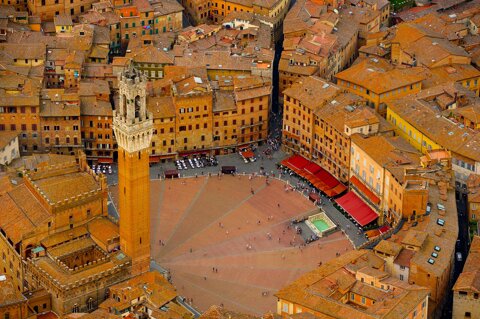
Piazza del Campo is not simply a square, but the stage where for centuries Siena’s very identity has been performed. Defined by its unmistakable shell shape and by the red-brick paving laid “on edge,” this space rises at the meeting point of the three hills on which the city is built. Its natural slope toward the majestic Palazzo Pubblico is not only an engineering device for water runoff, but a symbolic invitation to turn one’s gaze toward the heart of civic power. The square is divided into nine wedges, a lasting architectural tribute to the “Government of the Nine,” which between 1287 and 1355 brought Siena to its greatest economic and artistic splendor. Every element here speaks of harmony: from the curved outline of the noble palaces that surround it, to the white purity of the Fonte Gaia, Jacopo della Quercia’s sculptural masterpiece that crowns the upper ring of the shell.
The peak of emotional intensity is reached twice a year, on July 2 and August 16, when the square becomes the track of the Palio. On those days, ochre earth covers the outer ring and thousands of people crowd into the “casato” to witness a challenge that goes far beyond sport, embodying an ancestral rite of belonging and passion. Visiting Piazza del Campo means granting yourself the luxury of slowness: sitting on bricks still warm from the sun, admiring the shadow of the Torre del Mangia marking time like a giant sundial, and letting yourself be wrapped in an atmosphere that seems to have remained suspended in the Middle Ages. It is the place where Sienese people meet, where travelers are left breathless, and where history, quite simply, keeps on living.
curiosity
the advice
ATTRACTION
The Mangia Tower With its 400 steps, it is one of Italy’s tallest ancient towers. The effort of the climb is rewarded with a breathtaking view: on one side the perfect embrace of the shell-shaped square, on the other the endless panorama of Tuscan hills fading into the horizon. It is the highest point in the city, built to reach exactly the same height as the Cathedral’s bell tower, symbolizing the balance between State and Church.
The "Bando Stone" Look near the Public Palace for the stone from which, in ancient times, notices were read to the citizens. It is one of the spots where history still seems to speak.
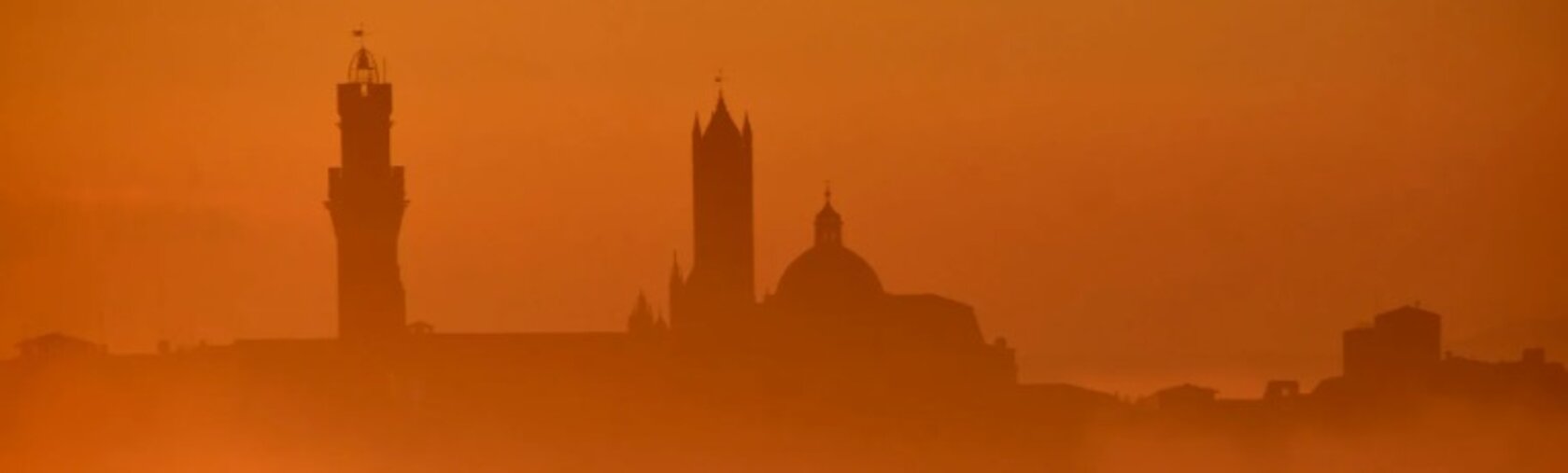
Sunset on the bricks Do as the Sienese do: sit on the square’s bricks around sunset time. It’s when the city’s “Terra di Siena” color glows with a magical light.
Tourist Information
Tower & Palace hours: The Public Palace and the Tower can be visited every day (usually 10:00-19:00). During the Palio and the days of the "tratta", hours may change drastically or there may be full closures.
Bookings: For the Torre del Mangia it’s not possible to book online (you buy the ticket on site the same day), so it’s advisable to go to the ticket office early in the morning, since entries are staggered and limited.
Food & drink: The bars in the square are ideal for a coffee with a view, but remember that prices at outdoor tables can be very high (the so-called "panorama price"). For a more authentic meal, explore the streets leading into the square, such as Via di Salicotto or Via pantaneto.